
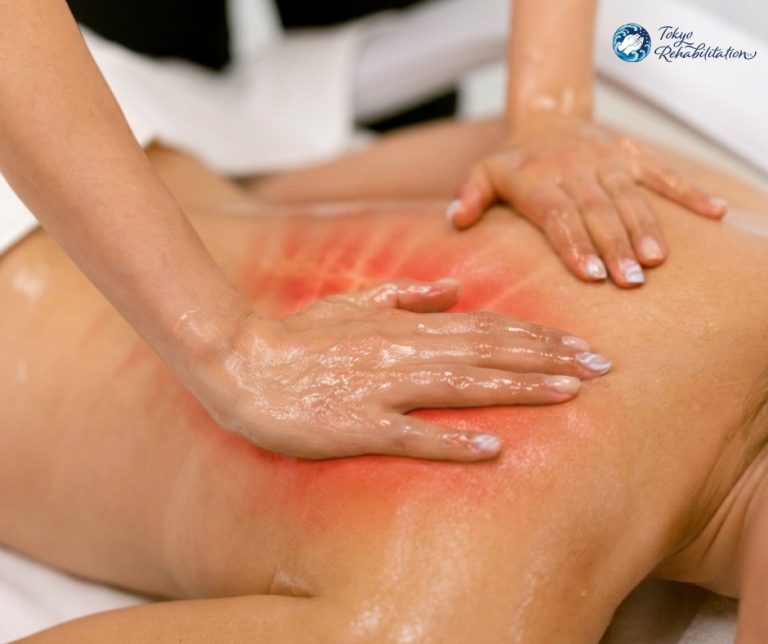
Lower back pain is one of the most common reasons people visit a clinic or miss work worldwide. In fact, research indicates that up to 80% of adults experience lower back pain at some point in their lives. The lumbar spine is a complex engineering marvel, responsible for supporting the weight of your upper body, allowing multidirectional movement, and protecting delicate neural pathways. However, this high mechanical demand also makes it vulnerable to structural stress, muscular imbalances, and acute injuries.
At its core, lower back pain is caused by mechanical disruptions, structural changes, or soft tissue injuries within the lumbar spine and its supporting elements. The most common triggers include acute muscle or ligament strains, degenerative disc disease, herniated discs, facet joint osteoarthritis, spinal stenosis, and postural dysfunction.
Understanding the underlying mechanisms of your pain is the first step toward lasting recovery. This comprehensive guide breaks down the anatomy of the lower back, classifies the major causes of lumbar discomfort, highlights common recovery mistakes, and outlines professional strategies to help you regain pain-free movement.
To identify what causes lower back pain, it helps to understand the underlying framework. The lower back, or lumbar spine, consists of five heavy-duty vertebrae labeled L1 through L5. These bones stack on top of one another and connect to the sacrum and coccyx at the base of the spine.
When any of these components are overloaded, irritated, or structurally altered, the nervous system sends out pain signals.
Mechanical pain is the most prevalent form of back discomfort, meaning the pain stems from the way the spinal structures move and interact under load.
Lumbar Muscle Strains and Ligament Sprains
Acute strains occur when muscle fibers are overstretched or torn, while sprains involve micro-tears in the ligaments that hold bones together. This typically happens during sudden twisting movements, heavy lifting with poor mechanics, or unaccustomed physical exertion.
Herniated, Bulging, or Slipped Discs
As we age or experience repetitive spinal flexion (bending forward), the intervertebral discs can sustain wear. A bulging disc occurs when the disc extended outward, compressing nearby nerves. A herniated disc happens when the soft nucleus pulposus breaks through the outer ring.
Degenerative Disc Disease (DDD)
Despite its alarming name, degenerative disc disease is a natural aging process rather than a disease. Over time, discs lose their water content and thin out. This reduces the space between vertebrae, decreasing shock absorption and placing greater friction and stress on the facet joints.
Facet Joint Osteoarthritis
As disc height decreases, the facet joints bear an increased load. The protective cartilage covering these joints can wear away, leading to bone-on-bone friction, inflammation, and localized stiffness. This type of pain is typically worse when standing or extending the spine backward.
Spinal Stenosis
Spinal stenosis is the narrowing of the spinal canal or the neural foramina (the exit channels for nerves). This narrowing can put pressure on the spinal cord and nerve roots. It is frequently caused by bone spurs (osteophytes), thickened ligaments, or bulging discs, and it often leads to leg cramping and pain when walking long distances.
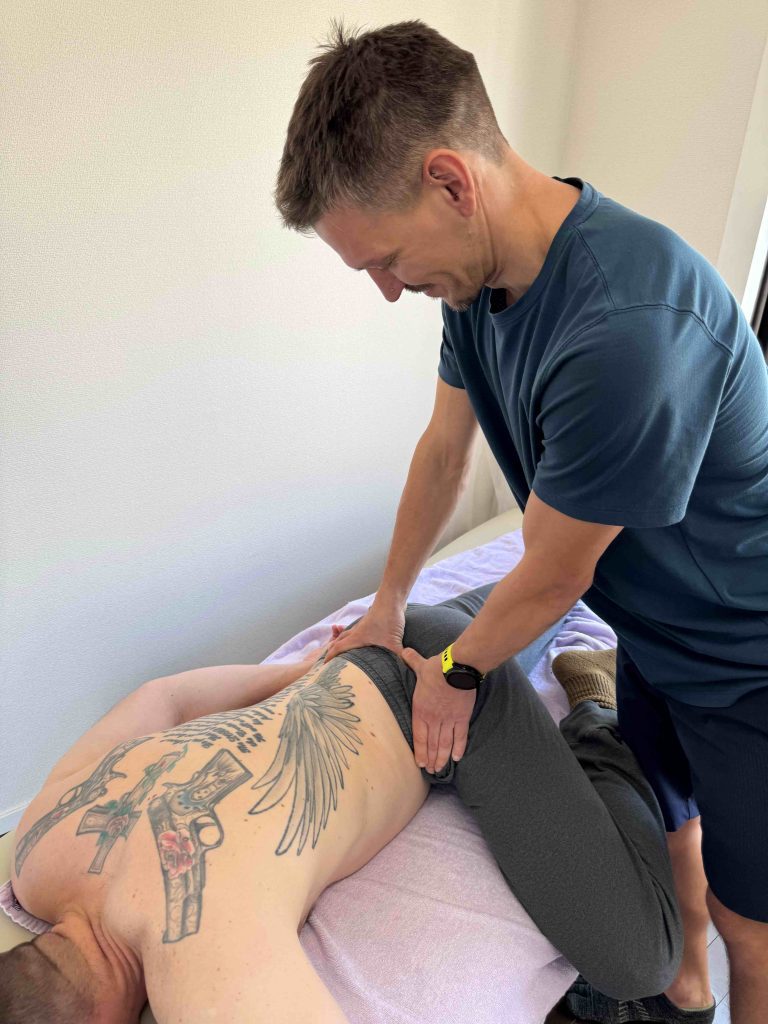
Not all back pain is triggered by an acute injury. Modern lifestyle adaptations place prolonged, low-grade structural stress on the musculoskeletal system, gradually wearing down tissues until pain surfaces.
Prolonged Sedentary Behavior and “Tech Neck” Repurposed
Sitting for hours at a desk compresses the lumbar discs and causes certain muscle groups to tighten while others weaken. This phenomenon is highly prevalent among office professionals, executives, and tech workers in major international business hubs like Tokyo.
Poor Lifting Mechanics
Lifting heavy objects requires a coordinated effort between the hips, core, and legs. Bending forward at the spine shifts the load away from the powerful gluteal and hamstring muscles, placing excessive shearing forces directly onto the lumbar vertebrae and intervertebral discs.
Poor Core Stability
The core is not just your abdominal muscles; it is a full muscular corset comprising the transverse abdominis, multifidus, pelvic floor, and diaphragm. A lack of deep muscular endurance leaves the spine without its primary active stabilizing system, making it highly vulnerable to micro-trauma during simple daily movements.
While mechanical issues explain most cases of lower back pain, non-mechanical or systemic factors can also be responsible. It is crucial to distinguish between these to ensure appropriate care.
Inflammatory and Autoimmune Conditions
Conditions like Ankylosing Spondylitis (AS) cause chronic inflammation of the spinal joints and entheses (where tendons and ligaments attach to bone). Unlike mechanical back pain, inflammatory back pain usually improves with movement and worsens with rest, often causing severe stiffness in the early morning.
Referred Pain from Internal Organs
The nerves supplying your lower back share pathways with several internal organs. Consequently, dysfunctions in other parts of the body can present as lower back pain:
Psychological Factors and Stress
The brain and body are deeply connected. Chronic psychological stress elevates cortisol levels, increases systemic inflammation, and causes involuntary muscle tension. Furthermore, chronic stress can amplify pain perception through a process known as central sensitization, making the nervous system hypersensitive to minor physical inputs.
A frequently overlooked contributor to lower back pain is the pelvic floor and pelvic girdle complex. This area is a cornerstone of core stability and structural alignment.
Pelvic Floor Muscle Dysfunction
The pelvic floor muscles form the base of your core canister. If these muscles are excessively tight (hypertonic) or weak (hypotonic), they can alter pelvic tilt, limit hip mobility, and create structural instability that forces the lumbar extensors to overwork, resulting in chronic low back stiffness.
Pregnancy-Induced Structural Shifts
During pregnancy, the body produces a hormone called relaxin, which softens ligaments to prepare the pelvis for childbirth. This ligament laxity, combined with a shifting center of gravity as the abdomen expands, places immense physical strain on the sacroiliac (SI) joints and the lumbar spine, making specialized pregnancy care essential.
Postpartum Recovery and Muscle Imbalances
After childbirth, the deep core muscles (specifically the rectus abdominis and transverse abdominis) are stretched and weakened. If a mother returns to heavy lifting, carrying an infant on one hip, or bending over cribs without re-establishing pelvic floor and deep core control, the lower back bears the brunt of the mechanical strain, leading to chronic postpartum back pain.
When lower back pain strikes, well-meaning individuals often fall into traps that delay recovery or worsen their condition. Avoiding these common mistakes can accelerate your path to relief.
Relying solely on heat packs, ice, massage, or pain medications provides temporary symptom relief but fails to address the underlying root causes, such as poor movement patterns, muscular imbalances, or joint restrictions. True, long-term resolution requires an active rehabilitation approach.
Many people demand an immediate X-ray or MRI the moment their back hurts. However, medical guidelines show that finding structural variations like bulging discs or mild degeneration is completely normal in adults, even those without any pain. Imaging is crucial when specific “red flags” are present, but rushing into it can lead to anxiety and unnecessary, invasive procedures for simple mechanical pain.
After an injury, people often treat their spine as if it were a rigid block, completely avoiding bending forward. While temporary modifications can help reduce acute irritation, avoiding natural spinal movement long-term causes spinal stiffness, muscle wasting, and fear-avoidance behaviors that actually prolong the pain cycle.
Resolving lower back pain requires a structured, multi-disciplinary approach that combines active movement, joint mobilization, and postural education.
Structural Rehabilitation Through Physical Therapy
Working with an experienced physical therapist ensures you receive a customized plan tailored to your specific biomechanical profile. Specialized care typically involves:
Integrating Clinical Pilates and Reformer Exercises
Clinical Pilates is an exceptional tool for back pain rehabilitation. Using specialized equipment like the Reformer, Pilates allows individuals to strengthen their deep core muscles and improve spinal articulation in a low-impact, supportive setting. This approach emphasizes controlled, precise movements that enhance body awareness and restore muscle balance.
Ergonomic Modifications for Sedentary Professionals
If you spend your workday at a desk, optimizing your workstation can drastically reduce spinal stress. Keep your monitor at eye level to prevent a forward-head posture, place your feet flat on the floor with your knees and hips bent at roughly 90-degree angles, and use a chair that supports the natural curve of your lower back. Most importantly, break up long periods of sitting by standing, stretching, or walking for two minutes every half hour.
The table below contrasts the mechanical differences between optimal movement patterns and the common compensatory behaviors that trigger lumbar pain.
Physical Activity / Position | Optimal Biomechanical Mechanics | Compensatory Mechanics (Pain Drivers) | Lumbar Structural Impact |
Lifting Objects from Floor | Hips hinge backward; knees bend; object is held close to body; core braced. | Spine rounds forward; knees straight; object held far from body; flat feet. | Increases disc pressure and creates intense posterior ligament shearing forces. |
Extended Desk Work | Neutral pelvis; feet flat; lumbar support engaged; head aligned over shoulders. | Slouched pelvis; rounded upper back; forward head posture; crossed legs. | Overstretches posterior ligaments and compresses the front of the discs. |
Standing Still | Even weight distribution; soft knees; active core; neutral pelvis. | Anterior pelvic tilt; hyper-extended knees; leaning onto one hip entirely. | Compresses the lumbar facet joints and shortens the lower back muscles. |
Carrying Heavy Loads | Symmetrical distribution; shoulders packed down; active abdominal wall. | Asymmetric carrying (e.g., child on one hip); spine tilted sideways or back. | Creates uneven compression on one side of the discs and facet joints. |
Q: When should I worry about lower back pain? (Red Flags)
A: Seek immediate medical attention if your lower back pain is accompanied by loss of bowel or bladder control, numbness in the groin or saddle area (saddle anesthesia), progressive leg weakness, a high fever, unexplained weight loss, or if the pain stems from a severe traumatic accident.
Q: Can tight hamstrings cause lower back pain?
A: Yes. Extremely tight hamstrings restrict the natural movement of your pelvis when you bend forward. This restriction forces your lower back to bend further to compensate, which places excessive mechanical strain on the lumbar discs and muscles.
Q: Why does my back hurt more in the morning?
A: Morning stiffness can stem from mechanical issues, like a mattress that doesn’t support you properly or discs that naturally swell with water overnight while you rest. However, if that morning stiffness lasts longer than 30 to 45 minutes and improves once you start moving around, it could point to an underlying inflammatory condition.
Q: Is walking good for lower back pain?
A: Absolutely. Walking is an excellent, low-impact exercise that increases blood flow to the spinal tissues, gently mobilizes stiff joints, and builds endurance in the postural muscles without placing excessive strain on the lower back.
Q: How long does typical lower back pain last?
A: Most acute episodes of mechanical lower back pain are self-limiting and improve significantly within two to six weeks with gentle movement, lifestyle adjustments, and physical therapy. If pain persists beyond twelve weeks, it is considered chronic and requires a comprehensive biomechanical evaluation.
Q: How does stress contribute to physical back pain?
A: Stress triggers the release of stress hormones like cortisol, which increases full-body muscle tension and lowers your overall pain threshold. This means stress can make your nervous system sense a minor physical irritation in your back as severe pain.
Lower back pain is a complex issue driven by a variety of interconnected factors, including structural changes, postural habits, and lifestyle strains. By understanding the biomechanics of your lumbar spine and taking a proactive, movement-focused approach to recovery, you can break free from the cycle of chronic discomfort.
If lower back pain is holding you back from your favorite activities or affecting your daily life, don’t wait for the symptoms to worsen. Consider scheduling a comprehensive movement evaluation with a professional team—like our licensed experts at Tokyo Rehabilitation—to identify the root cause of your discomfort and design a personalized path to lasting recovery.
Tokyo Rehabilitation has provided high-quality physical therapy to Japan’s English-speaking community for over 40 years. Our team of US- and Japan-licensed physical therapists, osteopaths, and clinical Pilates instructors delivers customized, one-on-one care at our clinics in Tokyo and Okinawa.
To resolve the structural root causes of lower back pain, we combine advanced clinical treatments:
To learn more and schedule an appointment:
If you enjoyed this article, please also see: Can Physical Therapy Help My Golf Injury?